What Is the IFC Recreational Fire Definition?
The International Fire Code (IFC), published by the International Code Council, is the model fire safety code adopted — in whole or with local amendments — by most U.S. jurisdictions. Section 307 of the IFC governs open burning and recreational fires.
Under IFC Section 307.1.1, a recreational fire is defined as an outdoor fire burning materials other than rubbish, where the fuel is not contained in an incinerator, outdoor fireplace, portable outdoor fireplace, barbeque grill or barbeque pit, and has a total fuel area of 3 feet or less in diameter and 2 feet or less in height, for pleasure, religious, ceremonial, cooking, warmth or similar purposes.
Three conditions must all be true for something to qualify as a "recreational fire": it burns non-rubbish material, the fuel is not contained in a listed structure type (fireplace, BBQ pit, etc.), and the fuel area stays within the dimensional limits.
Why This Matters for Wood-Fired Pizza Ovens
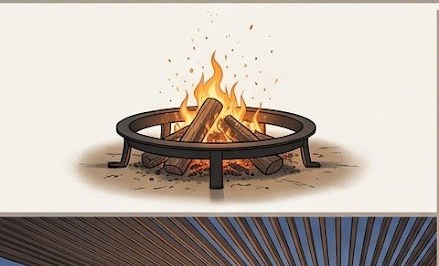
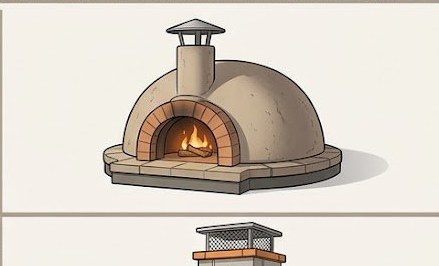
This is the source of most pizza oven permit rejections. When someone builds or installs a wood-fired pizza oven — whether a Neapolitan masonry dome, a prefab kit oven, or a portable unit like an Ooni Pro — they often receive a rejection citing the recreational fire 25-foot setback from combustible material.
The argument that resolves most of these rejections: a wood-fired pizza oven is not a recreational fire under the IFC definition.
The IFC definition says a recreational fire is one where the fuel is not contained in an "outdoor fireplace" or "barbeque pit." A pizza oven's firebox is enclosed within a dome or box structure — the fuel is not burning in an open pile on the ground. It is functionally analogous to an outdoor fireplace or cooking appliance, which means it falls outside the recreational fire definition entirely.
When permit applicants submit a written argument citing IFC 307.1.1 and explaining that the oven's enclosed firebox construction removes it from the recreational fire category, rejections are frequently reversed. The oven is reclassified as an outdoor cooking appliance or masonry structure, triggering standard building permit review rather than a fire setback denial.
A widely-referenced thread in the wood-fired oven community documents exactly this: a homeowner's permit was rejected citing the 25-foot recreational fire setback. The contractor appealed in writing, arguing that the oven does not meet the IFC recreational fire definition because the fuel is enclosed. The appeal was granted and a standard masonry permit was issued. The key was the written, code-specific argument — not a verbal appeal.
IFC Recreational Fire Setback Rules (Section 307.4)
For fires that do qualify as recreational fires, Section 307.4 sets the following base rules. Note that local amendments commonly alter these distances:
| Requirement | IFC Base Rule | Common Local Variation |
|---|---|---|
| Distance from structures | 25 feet | 10–25 feet |
| Distance from combustible fences | 25 feet | 10–15 feet |
| Distance from property line | Not specified in IFC | 5–25 feet (local) |
| Maximum fuel area diameter | 3 feet | Typically unchanged |
| Extinguishing equipment | Required | Required |
| Constant adult attendance | Required | Required |
| Prohibition during high wind | Authority discretion | Yes, typically >15 mph |
The 25-foot setback applies to all combustible material, not just buildings. A wood fence, a stack of lumber, dried landscaping — all count. In suburban lots under 6,000 sq ft, meeting a 25-foot setback from all combustibles for an open fire pit is often geometrically impossible, which is why the classification distinction matters so much.
IFC 307.4.3 — Portable Outdoor Fireplaces
The 2018 IFC added Section 307.4.3 specifically for portable outdoor fireplaces — the metal fire bowls, chimineas, and decorative pits sold at home improvement stores. This section allows portable outdoor fireplaces within 15 feet of a structure (compared to 25 feet for open recreational fires), provided they are used in accordance with the manufacturer's instructions.
Critical caveats: Not all jurisdictions have adopted the 2018 IFC. Cities on the 2015 or earlier edition do not have this provision, which means portable fire bowls default to the 25-foot recreational fire setback or local rules. Additionally, many jurisdictions with local amendments have set their own portable fire pit distances — ranging from 10 feet to 25 feet — regardless of the IFC model language.
How Local Amendments Change Everything
The IFC is a model code. Every city and county that adopts it may also adopt local amendments that alter specific sections. Common modifications affecting fire features include:
- Stricter setbacks — western U.S. cities in wildfire interface zones routinely require 15-foot minimums or ban wood-burning fire pits in certain zoning districts entirely
- Fuel type restrictions — some municipalities (notably parts of San Jose, CA and several Colorado cities) ban open wood-burning in residential areas, limiting homeowners to propane or natural gas fire features
- Air quality curtailment — SCAQMD (Southern California), BAAQMD (Bay Area), and Puget Sound Clean Air Agency have "no-burn" day programs that override IFC permissions seasonally
- Complete open-burning bans — a handful of densely populated cities have banned all outdoor burning regardless of IFC defaults
What to Do If Your Permit Is Rejected
If your permit application for a fire pit, outdoor fireplace, or pizza oven was rejected, work through this sequence:
- Get the rejection in writing. Verbal rejections are not official. Request a written denial citing the specific code section relied upon.
- Identify the code section. Is it IFC 307.1.1 (recreational fire definition)? Section 307.4 (setback)? A local amendment?
- For pizza ovens rejected as recreational fires: Draft a written response arguing that the oven does not meet the IFC 307.1.1 definition because the fuel is contained within an enclosed structure analogous to an outdoor fireplace. Cite the definition directly. Request reclassification as a masonry cooking appliance or outdoor fireplace.
- For setback issues: Ask whether a variance or special exception process exists. Many jurisdictions allow adjacent property owners to sign written consent, permitting a reduced setback distance.
- For wood-burning bans: Ask whether gas-fired versions of your intended feature are permitted. Conversion to propane or natural gas often resolves a fuel-type restriction.
- Consult a local contractor or permit expediter familiar with your specific building department. Past experience with their reviewers is worth more than any general code argument.
Frequently Asked Questions
Fire Pit Spark Screen, 24 Inch Round — Heavy Duty Mesh Cover with Handle & Poker
Most building departments and the IFC require a spark arrestor on any wood-burning fire feature. A heavy-duty mesh spark screen is typically what inspectors look for during the final inspection of masonry fire pits and fireplaces. Collapsible design with handle and poker included.
As an Amazon Associate, FireFeatureRules earns from qualifying purchases. Price subject to change. Last verified June 2025.